
Your Magnesium Probably Isn't Doing What You Think It Is
Most magnesium doesn't get absorbed well. Here's a smarter way to supplement.

The Problem You've Already Felt

You've done the work.
Blue-light glasses. Same bedtime every night. Maybe a weighted blanket. You've probably tried magnesium too — everyone talks about it.
So you grabbed a bottle from the store. Took it for a couple weeks. And... nothing. Or your stomach got upset.
You moved on. Figured magnesium just wasn't for you.
But here's what most people miss: it wasn't the magnesium. It was the type.
Most store-bought magnesium uses a cheap form called Magnesium Oxide. Research shows this form doesn't dissolve well, so your body has a hard time absorbing it.[1] Most of it just passes right through — which wastes your money and your time.
A study comparing two types found that Magnesium Citrate — a better form — was absorbed at a much higher rate in healthy people.[2] If the type matters this much, why is the cheap one still everywhere? Because it costs less to make. Not because it works better.
The Deficiency You Probably Have

About half of Americans don't get enough magnesium from their diet.[8] That's not a small number. It comes from large studies on what people actually eat.
Modern food is part of the problem. Processing strips magnesium out of grains. Farming changes have lowered mineral levels in soil over the years.[8] Even people who eat well can still come up short.
Here's what makes it tricky: you can be low on magnesium and not know it. Standard blood tests only measure about 1% of the magnesium in your body.[9] You can get a "normal" result and still be running low.
On top of that, stress, coffee, alcohol, and hard exercise all make your body use up magnesium faster.[10] You're losing more and taking in less — and most people never connect the dots.
Why the Type Matters More Than the Dose

Not all magnesium is the same once it hits your gut. This isn't opinion — it's basic chemistry.
Magnesium Oxide doesn't dissolve well in water. When it can't break down, it sits in your gut without being absorbed. That unabsorbed magnesium pulls water into your intestines — which is why cheap magnesium often causes stomach problems.
You're not getting the benefit you paid for. You're just passing it through.
A study compared Magnesium Glycinate (a premium form bonded to an amino acid) to Magnesium Oxide. The bonded form was absorbed at a much higher rate — even in people with sensitive stomachs.[3] Your body recognizes the amino acid and pulls the magnesium across the gut wall more easily.
Meanwhile, your body still needs that magnesium for healthy muscles and a calm nervous system.*
The bottom line: how much you take is only half the picture. How much your body actually absorbs is the other half.
The Sleep and Stress Connection

If you're reading this, sleep or stress (or both) probably brought you here. That's no accident.
Magnesium helps your brain produce GABA — a brain chemical that tells your nervous system to calm down.[4] When magnesium is low, that "calm down" signal gets weaker. You end up feeling wired but tired.
In one study, people who took magnesium got more deep sleep — the kind where your body repairs itself. They also showed healthier stress hormone levels during the first half of the night.[4] This isn't about sleeping more. It's about sleeping deeper.*
Another study (double-blind, with a placebo group) found that people taking magnesium slept longer, slept better, and made more melatonin — the hormone that controls your sleep cycle. Their stress hormone levels also moved in a healthier direction.[5]*
The stress side is just as clear. A long-term study found that daily magnesium helped the body handle cortisol (the main stress hormone) better — turning "I feel more relaxed" from a feeling into something you can measure.[6]*
And a review of 18 studies found that magnesium helps with everyday stress and nervousness — especially in people who are stressed or aren't getting enough magnesium to begin with.[7]
The science goes deeper. Lab research shows magnesium works with GABA receptors — the same system your brain uses to promote calm. It supports a natural path to relaxation using a mineral your body already needs.[13]*
When magnesium drops too low, the effects can spread. Early research shows that low magnesium can throw off your body's stress response system.[12] When that system is off, it gets harder to keep stress hormones in check, sleep well, and recover normally. Getting enough magnesium helps keep things running right.*
This isn't guesswork — it's a mineral your nervous system needs to work properly.*
The Mood Connection

Here's where the research gets personal.
In one clinical trial, people who took magnesium every day reported real improvements in how they felt — many within just a few weeks, not months.[11]*
That matters. Most supplement studies take a long time to show results. When the type and dose are right, many people notice a shift sooner than they'd expect.
Why so fast? Magnesium supports the same brain systems that control mood and emotional steadiness.[12,13] When those systems get the raw material they need, the results — steadier mood, more resilience, better emotional control — can show up faster than you'd think.*
This isn't about "curing" anything. It's about giving your nervous system a mineral it might be missing — and noticing what changes.*
Better-Absorbed Magnesium: What the Science Shows
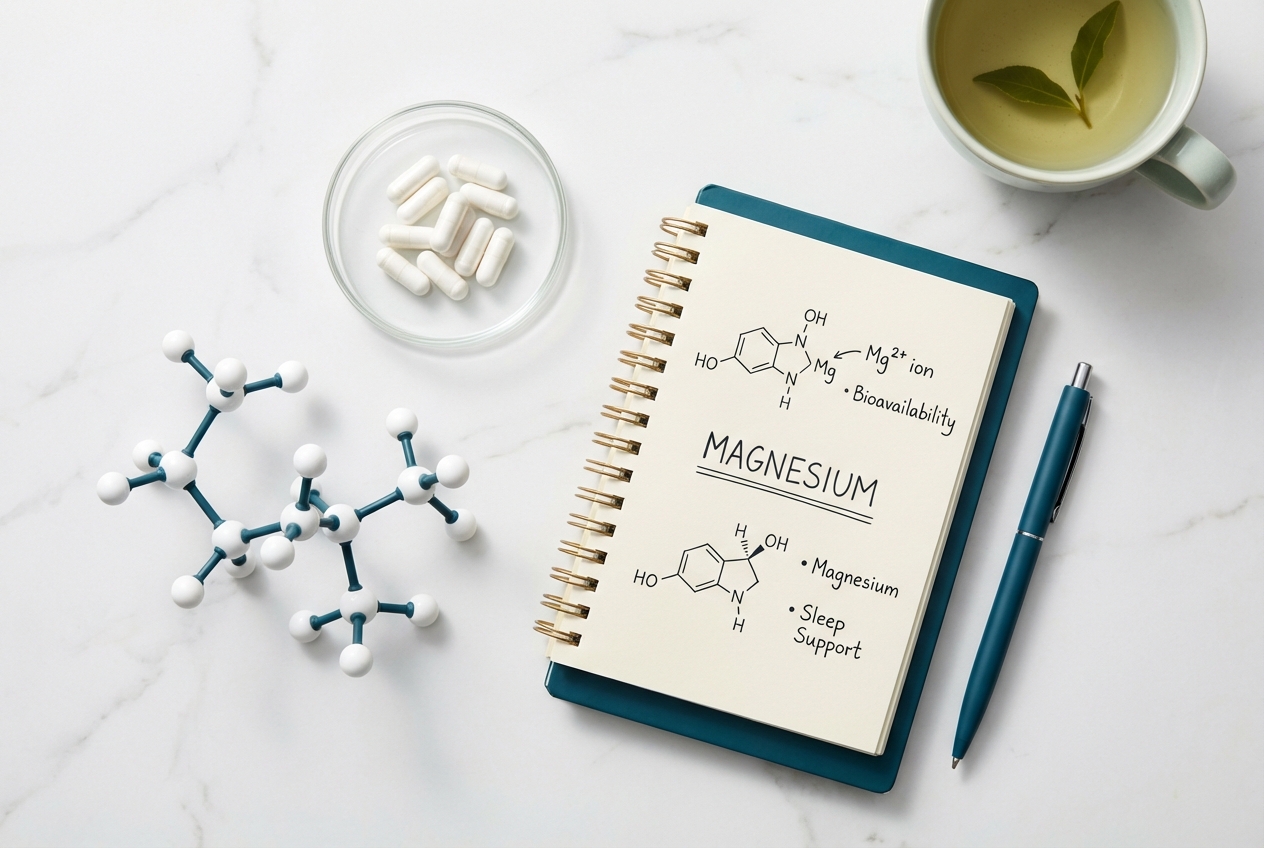
Scientists have known about this for years. The answer is using magnesium types your body can actually absorb. These include forms bonded to amino acids (like Magnesium Glycinate), mineral salts (like Citrate), and newer delivery methods (like magnesium wrapped in a special coating).
Each type uses a different method to get more magnesium through your gut and into your body — while cutting the stomach problems that come with cheap oxide.[1,3]
And this isn't based on one study. A 60-day trial confirmed that forms like citrate kept much higher absorption rates over time.[17] Lab research comparing ten different magnesium types found the same pattern: premium forms beat cheap ones in absorption every time.[18]
Here's the real-world difference:
So why doesn't everyone use premium forms? Simple — they cost more to make. They don't fit into tiny one-a-day pills as easily. The supplement aisle is driven by price, not results.
But "absorbable" isn't one-size-fits-all. Science supports several premium forms — each with its own strengths:
Glycinate/Bisglycinate — magnesium bonded to the amino acid glycine. Your body recognizes glycine and moves the magnesium across the gut wall more easily.[3] Best known for supporting calm, sleep, and nervous system function.*
Citrate — a mineral salt that dissolves well and absorbs easily in your gut.[2,17] A good all-around daily form, though higher doses can have a mild laxative effect.
Citrate + Malate blends — combine citrate's absorption with malate, a compound your cells use for energy.* A popular choice for active people.
Sucrosomial Magnesium — a newer approach where magnesium is wrapped in a special coating. This helps it get absorbed through a different pathway than standard gut absorption.[18]*
Different forms. Different strengths. That's exactly why a one-size-fits-all approach doesn't work — and why the quiz matters.
What Formulai Does Differently

This is where Formulai comes in — and why it's not just another supplement store.
Formulai picks premium magnesium products from trusted brands, then helps you find the right one. Because if people have different stress levels, sleep patterns, and lifestyles, a one-size-fits-all pick doesn't cut it.
A 60-Second Sleep and Stress Assessment
A short quiz that looks at your sleep patterns and daily stress. Based on your answers, Formulai matches you with the best product from its collection — the one that fits your specific profile.
Only Premium Absorbable Forms
Every product Formulai carries uses forms that are proven to absorb better — bonded glycinate, mineral salts like citrate and malate, and newer delivery methods. No cheap fillers. If it doesn't meet the standard, it doesn't make the shelf.
Third-Party Tested
Every product goes through independent testing for purity and strength. You know what's in the bottle — and what isn't.
Reading the Label: What to Watch Out For

Before you buy any magnesium product, here's what to look for — and what to walk away from.
Red flag #1: "Magnesium Oxide" listed as the main type — with no special delivery method. Some newer products wrap oxide in a special coating to fix the absorption problem.[18] But if the label just says "Magnesium Oxide" with nothing else, that's the cheap form with much lower absorption.[1,2]
Red flag #2: Proprietary blends. When a label says "proprietary blend," the company doesn't have to tell you how much of each ingredient is inside. You could be getting a full dose — or barely anything.
Red flag #3: No third-party testing or Certificate of Analysis. If a brand can't show that an outside lab checked what's in the bottle, that's a transparency problem.
Red flag #4: Artificial fillers, fake colors, or unnecessary extras. These don't help absorption and add things you didn't sign up for.
What to look FOR: absorbable forms — bonded (glycinate, bisglycinate), mineral salts (citrate, malate), or special-delivery types. Plus clear dosing for each ingredient and third-party testing from a real lab.
This is exactly what Formulai checks for in every product it carries.
What Your Body Is Telling You

Sleep and stress get the most attention. But magnesium does more than most people know — it also plays a role in your body's inflammation response and recovery.*
Research found that people with low magnesium intake had higher levels of a common inflammation marker in their blood tests.[14] Magnesium helps keep your body's inflammation response in check — and when levels are low, that gets harder to maintain.[15]*
If you track your health data, this is where it gets interesting. One study measured Heart Rate Variability (HRV) — a key number that shows how well your nervous system is balanced. People who took magnesium saw a clear shift from stress mode to rest-and-recover mode.[16]*
If you wear an Oura Ring, a Whoop, or track HRV in any app — this is the kind of shift that shows up in your data.
Inflammation, nervous system balance, recovery — these aren't separate problems. They're all tied to the same mineral gap.*
The Shift People Notice

People who switch from cheap magnesium to a well-absorbed form often describe the difference as subtle but real — feeling more settled in the evening, less of that wired loop.*
It's not a sleeping pill. It's not a drug. It's a mineral your body already needs, in a form your body can actually use.*
There's a real reason for this: when your magnesium levels improve, your brain's calm-down signals work better. Your nervous system can switch from stress mode to rest mode more smoothly.[4,7] That "settled" feeling isn't in your head — it's chemistry.*
And if you track your health data, the shift isn't just something you feel. One study showed magnesium improved Heart Rate Variability — the number your Oura or Whoop uses to score your recovery and readiness.[16]*
Beyond Magnesium: 5 Ingredients That Support Better Sleep

Magnesium is a strong base — but it's not the only ingredient backed by research for better sleep. Scientists have found five compounds that each work on a different part of the sleep puzzle. Combining them with magnesium can boost your results.*
Magtein (Magnesium L-Threonate) — The only magnesium form shown to get into the brain. Made at MIT, it raises brain magnesium levels for deeper, more restful sleep.*
Saffron — This golden spice isn't just for cooking. Saffron extract supports the brain chemicals that control mood and sleep quality, backed by clinical trials.*
Ashwagandha (KSM-66) — One of the most studied herbal supplements in the world. Clinical trials show it helps keep stress hormones in check, which can fix stress-related sleep problems.*
L-Theanine — Found naturally in green tea, L-Theanine helps your brain produce alpha waves — the same brain pattern seen during meditation — for calm without drowsiness.*
Valerian — Used for over 2,000 years, valerian root works with GABA (your brain's "calm down" chemical) to support your body's natural relaxation.*
Each ingredient works through a different pathway. That's why matching the right one to your specific sleep problem matters — and it's exactly what our quizzes are built to do.

Your Move
You've got two paths:
Path A: Keep guessing with generic supplements that your body might not even absorb — and wonder why nothing changes.
Path B: Take 60 seconds to find out which specific magnesium type actually matches your needs.
Formulai's Sleep and Stress Assessment is free, takes under a minute, and matches you with the right product — chosen for absorption, not marketing margins.
Fast results. Science-backed. Personalized for you.
*These statements have not been evaluated by the Food and Drug Administration. This product is not intended to diagnose, treat, cure, or prevent any disease.
References
- Firoz M, Graber M. Magnes Res. 2001;14(4):257-262.
- Lindberg JS, et al. J Am Coll Nutr. 1990;9(1):48-55.
- Schuette SA, Lashner BA, Janghorbani M. J Parenter Enteral Nutr. 1994;18(5):430-435.
- Held K, et al. Pharmacopsychiatry. 2002;35(4):135-143.
- Abbasi B, et al. J Res Med Sci. 2012;17(12):1161.
- Schutten JC, et al. Clin Endocrinol. 2021;94(2):263-271.
- Boyle NB, Lawton C, Dye L. Nutrients. 2017;9(5):429.
- Rosanoff A, Weaver CM, Rude RK. Nutr Rev. 2012;70(3):153-164.
- DiNicolantonio JJ, O'Keefe JH, Wilson W. Open Heart. 2018;5(1):e000668.
- Pickering G, et al. Nutrients. 2020;12(12):3672.
- Tarleton EK, et al. PLoS One. 2017;12(6):e0180067.
- Sartori SB, et al. Neuropharmacology. 2012;62(1):304-312.
- Poleszak E, et al. Pharmacol Rep. 2008;60(4):483-489.
- King DE, et al. J Am Coll Nutr. 2005;24(3):166-171.
- Nielsen FH. Nutr Rev. 2010;68(6):333-340.
- Wienecke E, Nolden C. MMW Fortschr Med. 2016;158(Suppl 6):12-16.
- Walker AF, et al. Magnes Res. 2003;16(3):183-191.
- Coudray C, et al. Magnes Res. 2005;18(4):215-223.